



























Skip to content

Microfluidic resistive pulse sensing

See every particle.
Count every one.

Spectradyne’s MRPS and F-MRPS technology measures the size, concentration, and fluorescent phenotype of every nanoparticle in your sample — in minutes, not days.

Get a quoteRequest a demoFree sample measurement

3 µL
Sample volume
<5 min
Per run
50–10000 nm
Detection range
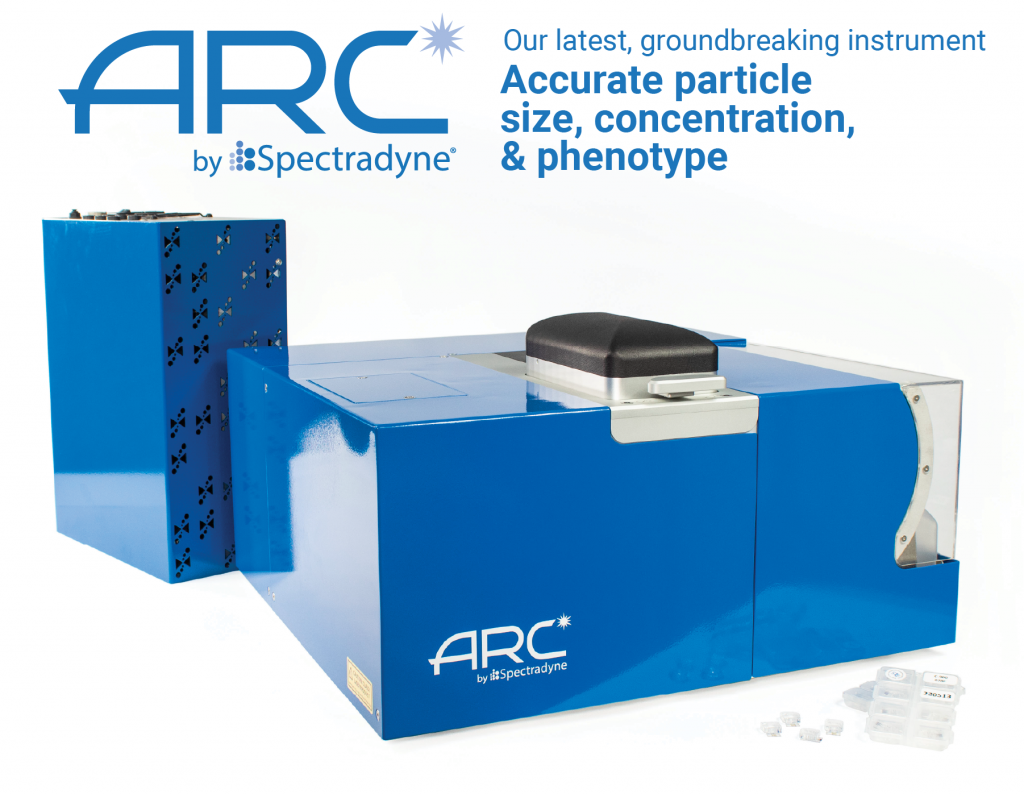
Spectradyne ARC Particle Analyzer
Trusted by MIT Novartis Mass General Hospital Partner Partner Partner Partner Partner Partner Partner Partner Partner Partner Partner Partner Partner Partner Partner Partner Partner Partner Partner Partner Partner Partner Partner Partner Trusted by MIT Novartis Mass General Hospital Partner Partner Partner Partner Partner Partner Partner Partner Partner Partner Partner Partner Partner Partner Partner Partner Partner Partner Partner Partner Partner Partner Partner Partner

Watch and learn more about the power of our Technology

Spectradyne Particle Analysis produces groundbreaking technology for nanoparticle research. Spectradyne's instruments use patented microfluidic cartridge technology to detect and measure every particle in your formulation. We have developed a unique implementation of microfluidic resistive pulse sensing (MRPS), which uses electrical sensing to measure the diameter of each particle as it passes through a nanoconstriction, providing real-time sizing and concentration information. With our MRPS technology combined with excitation and collections optics in our ARC Particle Analyzer, fluorescent subpopulations can simultaneously be accurately quantified along with accurate size and concentration.

Applications

Built for the samples that matter most

Lipid Nanoparticles & Nanomedicine

Directly measure payload, target ligand density, and encapsulation efficiency together with particle size and concentration. Eliminate guesswork from indirect techniques like Ribogreen. GMP/GAMP and 21 CFR compliance ensures scalability from research to manufacturing.

Learn more →
Extracellular Vesicles

Accurately count and size individual EVs down to 50 nm using electrical sensing — not light scattering. EVs present very low optical contrast in aqueous media, making MRPS uniquely suited for accurate EV quantification. Combine with fluorescent phenotyping on the ARC.

Learn more →
Virus & Gene Therapy

Run viral titer in minutes. Directly count virus down to 50 nm diameter — no live biological assay required. Viral and non-viral gene therapy vectors are quantified with high resolution, using just 3 µL of sample.

Learn more →
Gene Therapy & Nanomedicine

Accurately quantify viral and non-viral therapeutic vectors with any degree of polydispersity. Only 3 µL of sample required — critical when material is scarce. Assess concentration, size, purity, and stability in a single measurement.

Learn more →
Protein Aggregation

Detect formulation instabilities 1000× faster — while aggregates are still nanoscale and too small for conventional optical techniques. Turn weeks of stability testing into minutes by catching problems earlier in development.

Learn more →
Industrial Nanoparticles

Paints, inks, cosmetics, semiconductor polishing slurries, and foods all rely on nanoparticle ingredients. Spectradyne’s electrical sensing method works across all material types regardless of optical properties — delivering accurate size and concentration where DLS cannot.

Learn more →

View all applications →

Head-to-head comparison

What sets Spectradyne apart?

F-MRPS combines two orthogonal measurement methods to deliver accuracy that optical techniques simply cannot match.

Spectradyne
F-MRPS
DLS NTA nanoFCM
View data table
Category Spectradyne F-MRPS DLS NTA nanoFCM
Measurement Principle Electrical and optical — a unique combination of two orthogonal methods Optical — light scattering, ensemble average Optical — light scattering, single-particle tracking Optical — light scattering, single-particle
Ease of Use Excellent — fast and easy, no calibration, cleaning, or reference measurements required Moderate — reference measurements required Moderate — cleaning between samples; significant sample assumptions required Poor — time-consuming alignment procedures, reference and calibration samples, laborious cleaning procedures
Accuracy for Complex Samples Excellent — accuracy is independent of refractive index, polydispersity, or sample heterogeneity Poor — polydispersity and heterogeneity strongly affect accuracy Poor — polydispersity and heterogeneity strongly affect limits of detection and accuracy Poor — heterogeneous optical properties (e.g. refractive index) strongly impact accuracy

Head-to-head comparison

Resolving what DLS and NTA cannot

Polydisperse polystyrene sample containing four populations at 52, 94, 122, and 150 nm. MRPS resolves every population with absolute concentration. NTA misses the smallest particles. DLS reports a single broadened peak with no concentration data.

NTA detection falls off as D⁶, causing smaller particles to be missed and creating a false peak in the reported distribution. DLS averages across all particles, dominated by the largest. MRPS measures each particle individually using electrical sensing.

View data table
Method 52 nm 94 nm 122 nm 150 nm Absolute concentration Resolves polydisperse mixtures
MRPS (Spectradyne) Yes Yes — all four peaks resolved
NTA Partial Relative only No — false peak cutoff below ~90 nm
DLS No No — single broadened peak, D⁶ dominated

See what our customers have to say

Contact us today to see the power of our technology for yourself

Upgrade your lab today with our fast, accurate, and easy-to-use technology

Click below to contact our sales team